Why Regenerative Medicine Is Changing the Algorithm in Foot & Ankle Care
The Gap Between “Wait It Out” and Surgery
For years, traditional foot and ankle treatment algorithms often looked something like this:
Rest.
Anti-inflammatories.
Physical therapy.
Steroid injections.
Orthotics.
Maybe surgery.
And while many of those tools still absolutely have value, there has historically been a frustrating gap in treatment options for patients who are:
- Still in pain
- Not improving
- Not ready for surgery
- Or simply looking for a more proactive approach to healing
That gap is where regenerative medicine has started changing the conversation.
At Align Foot & Ankle, regenerative therapies have become an important part of how we approach both chronic injuries and recovery optimization — not as a “last resort,” but as an earlier consideration in the healing process for the right patient.
The Old Model Was Often Focused on Managing Symptoms
Traditional care frequently centered around:
- Reducing pain
- Decreasing inflammation
- Temporarily calming symptoms
But many chronic foot and ankle problems are not simply “inflammation problems.”
They are often:
- Degenerative tendon conditions
- Tissue overload injuries
- Poor healing environments
- Chronic microtrauma
- Biomechanical dysfunction
- Repetitive stress injuries
In other words, the tissue itself may not be functioning normally anymore.
That changes how we think about treatment.
Regenerative Medicine Focuses on Supporting Healing
Regenerative medicine aims to support the body’s natural repair processes rather than simply masking symptoms.
Depending on the condition, this may involve therapies designed to help:
- Support tissue signaling
- Improve circulation
- Stimulate cellular activity
- Enhance collagen remodeling
- Optimize the healing environment
- Encourage recovery at the source of injury
The goal is not perfection overnight.
The goal is creating better conditions for healing and function.
Why Patients Are Seeking These Options
Patients today are asking different questions than they did 10 or 20 years ago.
They are looking for:
- Less invasive options
- Faster recovery
- Reduced downtime
- Alternatives before surgery
- Treatments focused on healing and longevity
- More active participation in their recovery
Many patients no longer want to hear:
“Just live with it until it gets bad enough for surgery.”
They want options earlier in the process.
Modern Foot & Ankle Care Is Becoming More Strategic
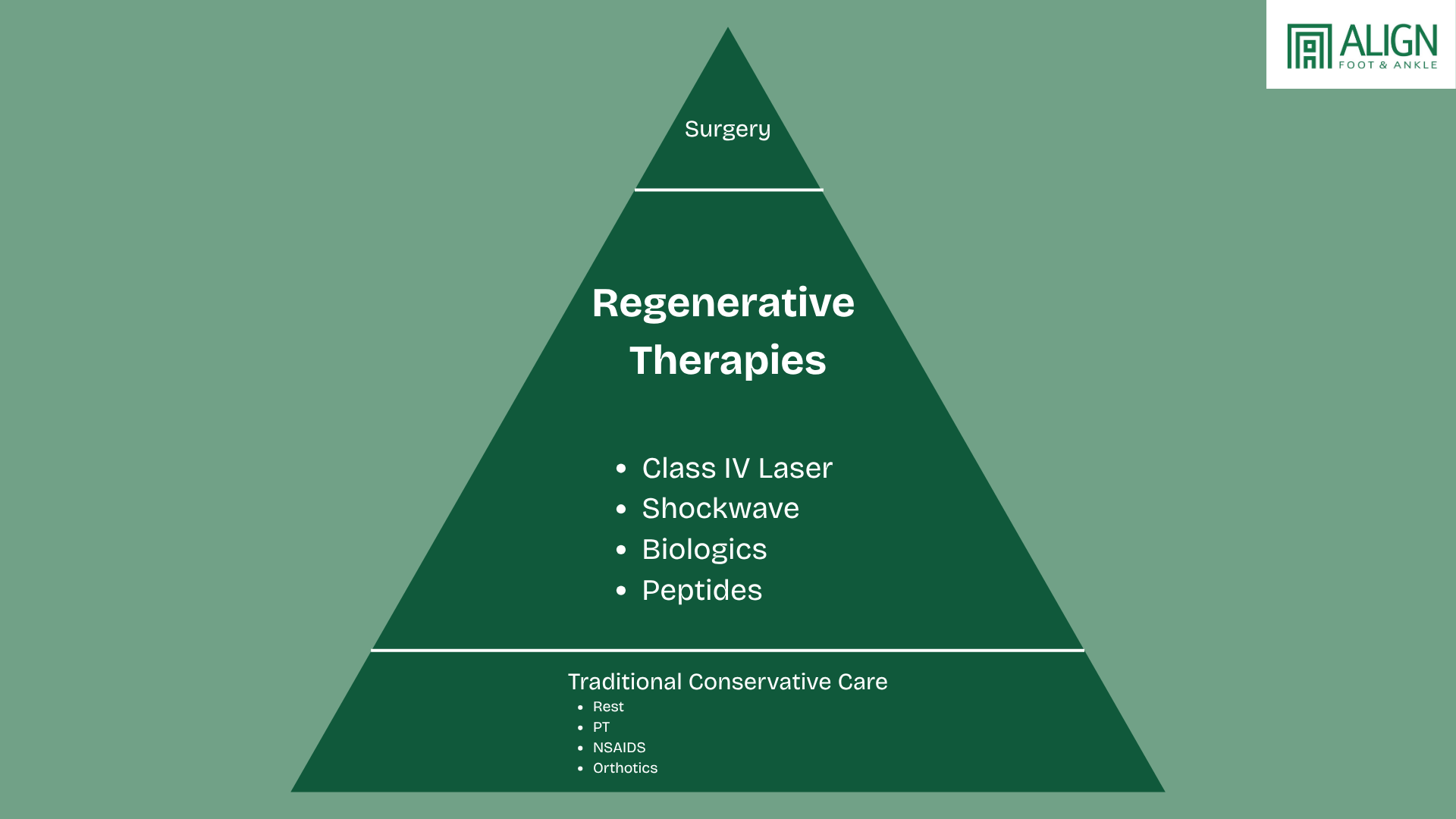
One of the biggest shifts happening in medicine is that treatment is becoming more layered and personalized.
Instead of viewing care as:
Conservative treatment → failed treatment → surgery
We now have more tools that can potentially bridge that gap.
That may include:
- Shockwave therapy
- Class IV laser therapy
- Biologics
- Photobiomodulation
- Rehabilitation and load management
- Custom orthotics
- Minimally invasive procedures
The future is not necessarily choosing one tool.
It’s understanding when to strategically combine them.
This Does Not Mean Surgery Is Bad
Surgery still plays a critical role in foot and ankle care.
In many cases, surgery is absolutely the right answer.
But regenerative medicine is changing when we intervene, how we intervene, and sometimes whether surgery can be delayed or avoided altogether.
And when surgery is needed, regenerative therapies are increasingly being explored to help support recovery and healing afterward as well.
The Future Is About Restoration, Not Just Relief
One of the biggest mindset shifts happening in medicine is this:
Patients are no longer only seeking temporary pain relief.
They are seeking function, movement, recovery, and longevity.
That is why regenerative medicine continues to grow across orthopedics, sports medicine, and foot & ankle care.
Because the conversation is evolving from:
“How do we suppress symptoms?”
to:
“How do we support healing?”
Changing the Algorithm
Regenerative medicine is not replacing traditional medicine.
It is expanding the toolbox.
It is giving physicians and patients more options between “do nothing” and “major surgery.”
And perhaps most importantly, it is changing the mindset of modern medicine:
from simply reacting to pain…
to proactively supporting recovery, function, and healing.
Schedule a consultation today.
Contact Align Foot & Ankle
• Phone: 512-882-4911
• Location: 1600 W 1600 W 38th St #408, Austin, TX 78731
Don’t forget to check out our socials for valuable insights and updates:
• Tiktok