
Why Your Heels Crack More in the Summer
And What Your Feet Are Trying to Tell You
Every summer, we see a huge increase in patients coming into Align Foot & Ankle asking the same question:
“Why are my heels suddenly so dry and cracked?”
The truth is, summer is basically the perfect storm for cracked heels.
More sandals.
More barefoot walking.
More heat.
More exposure.
More dehydration.
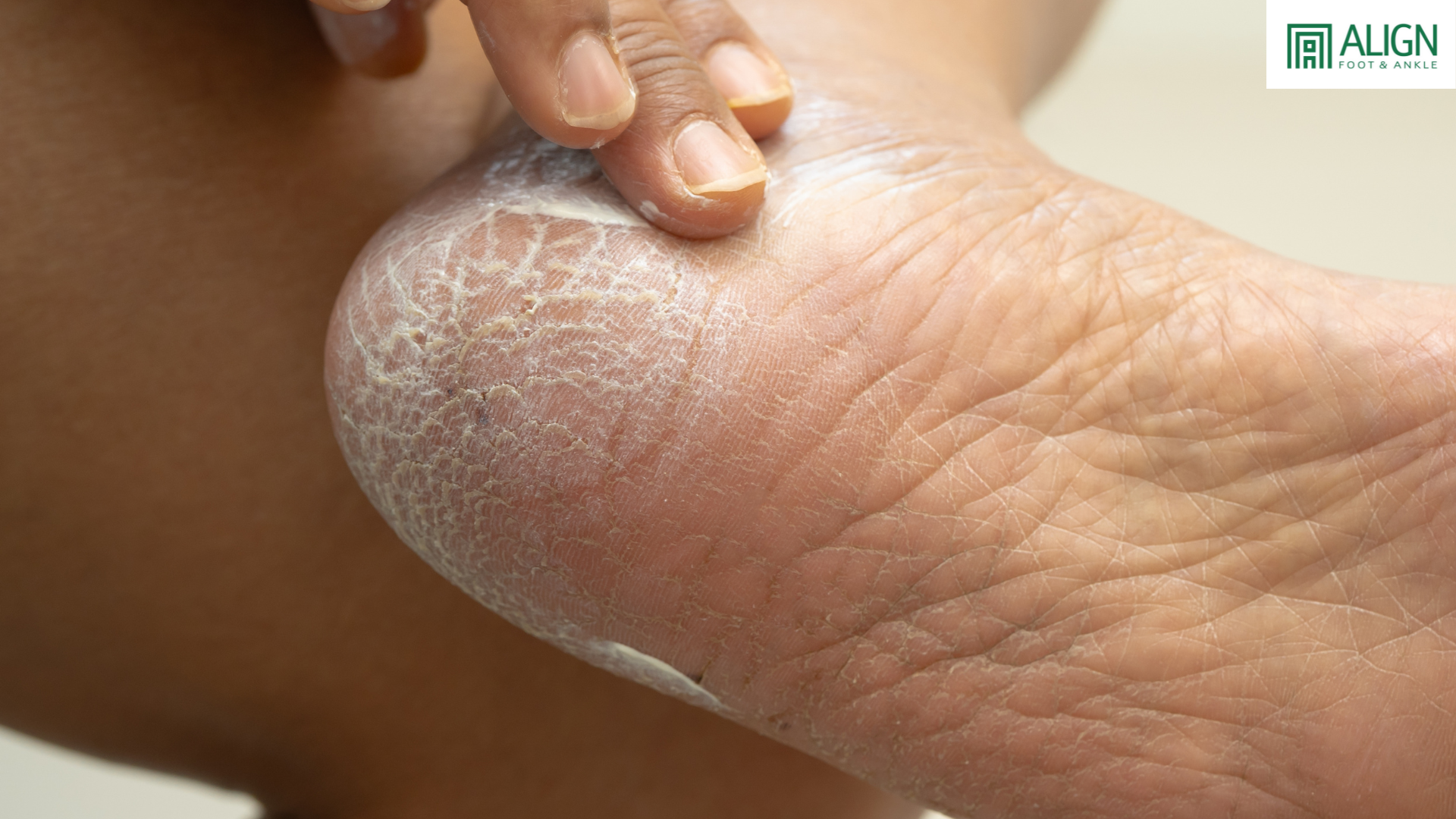
And while cracked heels may seem cosmetic at first, they can eventually become painful, deep, and even lead to skin breakdown or infection if ignored.
Why It Happens More in Summer
Open-Back Shoes and Sandals
Flip flops and sandals leave the heel exposed with very little support.
When the heel expands outward while walking, the skin stretches and splits more easily — especially if the skin is already dry.
The more unsupported the heel is, the more pressure and friction develops around the edges.
Barefoot Walking Increases Dryness
Walking barefoot around pools, patios, lake houses, and beaches may feel great in the moment, but it dries out the skin significantly.
Hot surfaces and repeated exposure strip away natural oils that normally help keep skin flexible and protected.
Over time, the skin becomes:
- Thickened
- Dry
- Callused
- Less elastic
That combination makes cracking much more likely.
Heat and Dehydration Matter Too
Summer heat can contribute to overall dehydration, and your skin often reflects that first.
When skin loses moisture, it becomes more rigid and fragile instead of soft and flexible.
That’s why many people notice:
- White flaky heels
- Thick callus buildup
- Splitting around the heel rim
- Pain when walking barefoot
Sometimes It’s More Than Just Dry Skin
Cracked heels can also be worsened by:
- Flat feet or abnormal foot mechanics
- Increased pressure on the heel
- Obesity
- Diabetes
- Fungal skin infections
- Certain inflammatory skin conditions
In some patients, we’re not just treating dry skin — we’re treating the underlying mechanical stress causing the skin to repeatedly split.
The Biggest Mistake People Make
Most people wait until the crack becomes painful before they do anything.
Then they start aggressively filing, scraping, or using random over-the-counter products that either:
- Don’t penetrate deeply enough
- Irritate the skin further
- Temporarily soften the surface without addressing the cause
The goal is not just to remove dry skin.
The goal is to restore the skin barrier and reduce the stress causing the cracking in the first place.
What Actually Helps: Targeted Skin Care Matters Too
Not all foot creams are created equal.
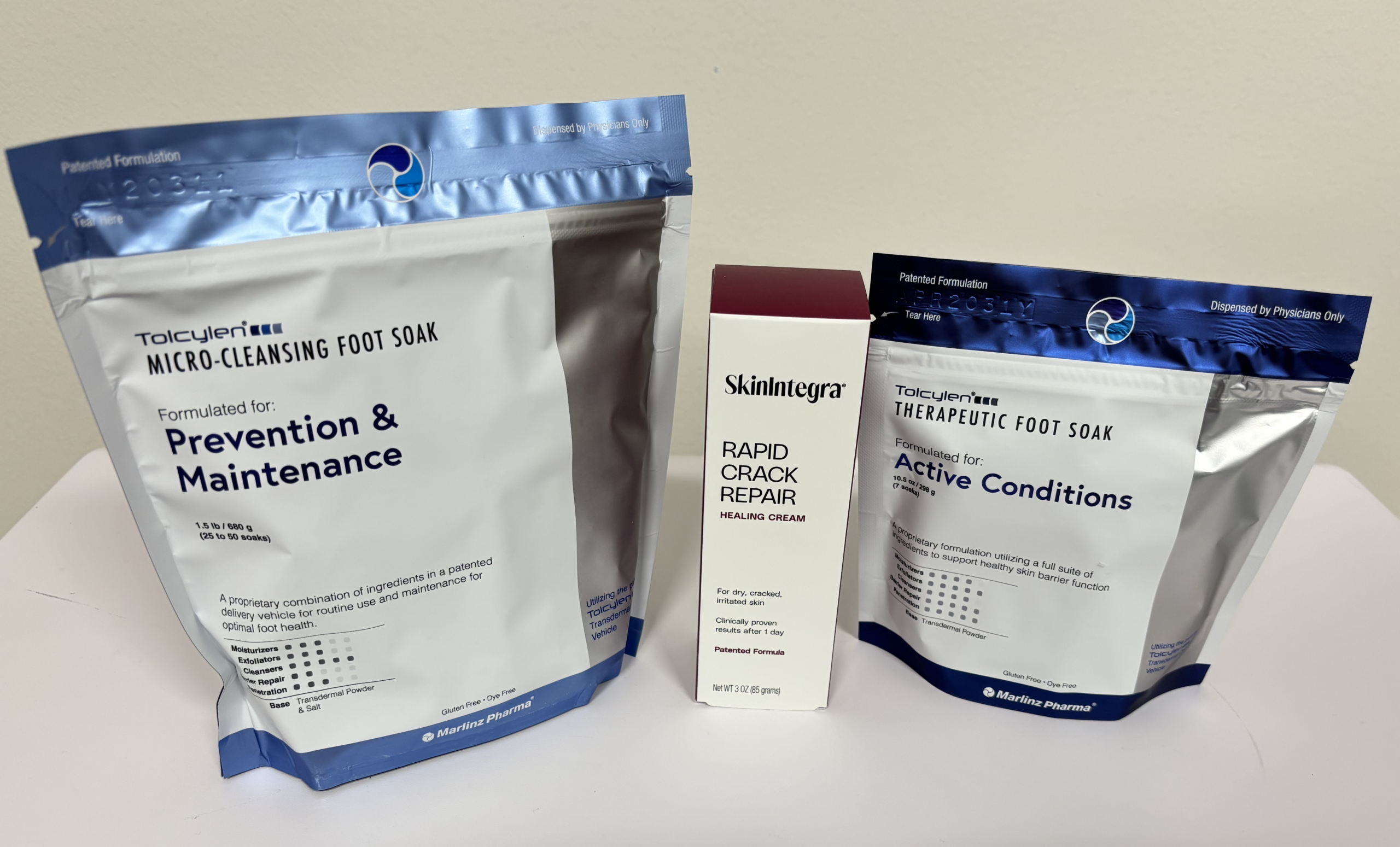
Many over-the-counter lotions simply sit on the surface of the skin without meaningfully helping thickened, cracked heels. In clinic, we often recommend medical-grade products designed specifically for dry, fissured, or compromised foot skin.
One of our favorites is Skin Integra Rapid Crack Repair, which helps soften thickened skin while restoring hydration and supporting the skin barrier. Products containing ingredients like urea, lactic acid, and exfoliating moisturizers can be especially helpful for patients dealing with chronic dryness and callus buildup.
For patients dealing with dry, scaling skin associated with fungal involvement, we may also recommend Tolcylen soaks and topical products as part of a more comprehensive foot care routine. In many cases, fungal skin changes and cracked heels can overlap, especially during the summer months when heat and moisture create the perfect environment for irritation.
The key is consistency.
Small daily habits — supportive footwear, hydration, proper skin care, and addressing underlying pressure points — often make the biggest difference over time.
Daily Moisturizing
Consistency matters more than intensity.
Look for creams containing:
- Urea
- Lactic acid
- Salicylic acid
These ingredients help soften thickened skin while restoring moisture and improving skin flexibility.
Best time to apply:
- After showering
- Before bed with socks
For patients with more advanced dryness or fissuring, medical-grade foot care products may provide deeper penetration and better long-term results compared to standard lotions.
Avoid Aggressive “Bathroom Surgery”
Please do not attack your heels with razors, graters, or excessive scraping tools.
We see plenty of patients accidentally create:
- Bleeding
- Deep fissures
- Skin infections
Especially patients with diabetes or poor circulation.
Address the Mechanics
If the heel continues cracking repeatedly, there is often an underlying pressure or gait issue contributing to it.
Sometimes custom orthotics, better shoe support, or addressing foot structure can make a major difference long term.
Cracked Heels Are Common — But They Shouldn’t Be Ignored
A small superficial crack may seem harmless, but deeper fissures can become extremely painful and difficult to heal.
Your skin is often giving you an early warning sign:
- Too much pressure
- Too much dryness
- Not enough support
And in many cases, small changes early can prevent much bigger problems later.Your feet carry you all summer long. They deserve a little maintenance too.
Schedule a consultation today.
Contact Align Foot & Ankle
• Phone: 512-882-4911
• Location: 1600 W 1600 W 38th St #408, Austin, TX 78731
Don’t forget to check out our socials for valuable insights and updates:
• Tiktok